
Emergency

Abirami Lifeline

November 2026

Uncategorized

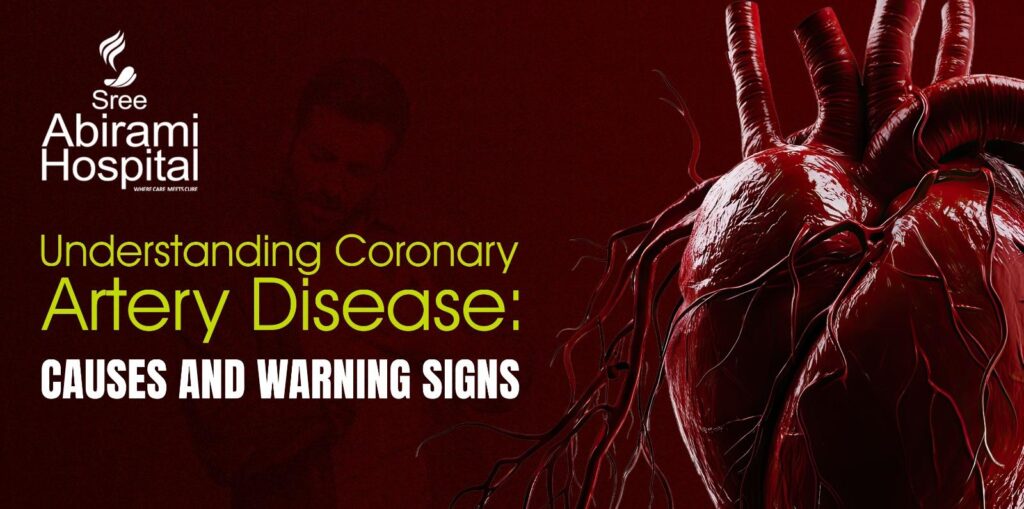
Understanding Coronary Artery Disease: Causes and Warning Signs

Introduction: What Happens When Your Heart’s Blood Supply Is Reduced? Our heart doesn’t get a single holiday. Sleeping, eating, walking – it is pumping all the time. But here is the thing many people don’t think about: the heart muscle itself needs blood too, and it gets that through small pipes called coronary arteries. So what happens when these pipes get narrow, or worse, blocked? That is what we call Coronary Artery Disease, or CAD. Like an old water pipe at home that slowly gets choked with dirt – same way, fat and cholesterol choke these arteries, and the heart muscle starts struggling for blood. A lot of heart attacks begin from this only. If the causes and early signs are known, a doctor visit can happen well before it becomes an emergency. Sree Abirami Hospital in Coimbatore has its own cardiology team for heart check-ups, tests and treatment. What Is Coronary Artery Disease? Inside the coronary arteries, a sticky layer called plaque keeps piling up, layer over layer, till the artery is half closed or fully closed. The medical word for this is atherosclerosis – big word, but the meaning is just this much. As the plaque keeps building: The arteries become narrow Less blood reaches the heart muscle During exercise, the heart gets less oxygen than it needs A blood clot may form and block the flow completely A severe block can lead to a heart attack So the earlier it is caught, the better. Treatment also works best when started on time. 7 Common Causes and Risk Factors of Coronary Artery Disease Some of it is health conditions, some of it is daily habits – either way, these raise the chance of CAD. 1. High Cholesterol LDL, the “bad” cholesterol, is the main culprit here. Too much of it, and it keeps sticking to the artery walls – the heart gets less and less blood over the years. 2. High Blood Pressure BP left unchecked keeps hitting the artery walls from inside. Once the lining is damaged, plaque settles there easily. 3. Diabetes Sugar patients, take note – diabetes raises the chance of both heart disease and stroke. Years of high sugar quietly damage the blood vessels. 4. Smoking Every cigarette harms the blood vessels and pushes BP up. Straight away, the CAD risk goes higher. 5. Physical Inactivity Office chair all day, sofa all evening? This kind of life invites obesity, high cholesterol and high BP – and all three are bad news for the heart. 6. Unhealthy Eating Habits Fried snacks, bakery items, too much salt – food high in saturated fat, trans fat and salt, eaten often, adds to the heart risk. 7. Family History and Age Did a parent or close relative get heart disease at a young age? Then your risk is higher. And as age goes up, the risk climbs for most people anyway. Warning Signs of Coronary Artery Disease You Should Not Ignore CAD can be silent in the beginning – no pain, no trouble, nothing. But when the body does give signals, don’t brush them aside: Warning Sign What You May Feel Chest pain (Angina) Heaviness, tightness or a squeezing feeling in the chest Breathing difficulty Getting breathless while climbing stairs or walking fast Unusual tiredness Feeling very tired even during normal activities Pain in other areas Discomfort in the arms, shoulders, neck, jaw or back Dizziness Feeling dizzy or faint Cold sweat Sudden sweating along with chest pain Nausea Vomiting sensation, sometimes along with other heart symptoms Important: Chest pain, breathlessness, cold sweat, pain going to the arm or jaw – these together can mean a heart attack. Don’t waste time. Call 108 or reach the nearest hospital emergency at once; waiting at home for it to settle is the biggest mistake people make. How Is Coronary Artery Disease Diagnosed? You don’t have to decide the tests yourself. After hearing your symptoms and going through your old reports and risk factors, the doctor will tell you what is needed. Common heart tests include: ECG (Electrocardiogram) – records the electrical activity of the heart ECHO (Echocardiogram) – uses ultrasound to check the heart’s structure and movement TMT (Treadmill Test) – checks how the heart responds to exercise, for selected patients CT Coronary Angiography – an imaging test of the coronary arteries Coronary Angiography – finds narrowing and blocks in the coronary arteries Not everybody needs every test, so don’t panic seeing this list. Your cardiologist will choose only what is required. What Are the Treatment Options for Coronary Artery Disease? How bad the block is, what symptoms are there, and the overall health of the patient – treatment is planned based on all three. Your doctor may advise: 1. Lifestyle Changes Following a heart-healthy diet Keeping weight in control Stopping smoking Being physically active as per medical advice Getting BP and cholesterol checked often 2. Medicines Mostly tablets – one for BP, one for cholesterol, maybe one to keep the blood from clotting. Depends on the patient. 3. Angioplasty Through a thin tube, a small balloon reaches the blocked part of the artery. Then the balloon is blown up and the passage opens. Most of the time a stent – tiny mesh tube – is fixed there so it won’t close again. 4. Coronary Bypass Surgery If there are many blocks, or the blocks are complicated, bypass surgery may be advised. Here, a new path is made so blood can reach the heart muscle again. How Can You Reduce Your Risk of Coronary Artery Disease? Preventing CAD is not some big complicated thing. Know your risk, then make small changes daily. Some easy things to start with: Add more fruits, veggies and whole grains to your plate Cut down on unhealthy fats and extra salt Stay active as per your doctor’s advice Check your blood pressure regularly Test your cholesterol and blood sugar Quit cigarettes and any form of tobacco Keep your weight in a healthy range Go
Uncategorized

How Does an Ambulance Support Post-Surgery Patients at Abirami Hospital?

Introduction The operation itself may finish in a few hours. Recovery? That is a different story altogether. Medical care, rest, and one thing people often forget – how the patient will travel. Many patients can’t move freely like before, and sitting in a normal car or auto for a long ride is not easy for them. This is where an ambulance makes things simpler. The patient travels lying down or supported, and medical help is right there on the way. In Coimbatore, Sree Abirami Hospital is having ambulance service round the clock – for emergencies and also for shifting patients. Inside the vehicle itself the medical support is ready, so whether it is hospital, home or somewhere else, the patient reaches safety. Why Is Ambulance Transportation Important After Surgery? A trip after an operation is nothing like a normal trip to town. Car, auto or ambulance – the choice depends on the surgery done, how the patient is feeling that day and, most importantly, the doctor’s word. An ambulance may be needed for: Patients who find it hard to walk or sit Elderly people recovering from surgery Patients who need monitoring during the ride Those who had a major operation Patients being shifted from one hospital to another Anybody needing a helping hand on discharge day The body is still healing, so less jerks and strain on the road is always better. 5 Ways an Ambulance Supports Patients After Surgery 1. Safe Patient Transportation Getting in and out of a normal vehicle right after surgery? Not easy at all. Ambulances are made for patient transfer, with stretcher support. The patient moves very little during the ride, so there is less pain and less stress on the body. 2. Medical Assistance During Transportation Some patients may need medical attention even while travelling. Abirami Hospital’s life support ambulances carry equipment like: Oxygen support Transport ventilators Defibrillators Patient monitors Basic life support kit What support is given depends on the patient’s condition and the type of ambulance booked. 3. Support for Patients with Limited Mobility After orthopaedic, abdominal or any big surgery, moving around can be difficult for some time. An ambulance can help with: Stretcher-based travel Help while shifting the patient A comfortable lying or sitting position on the way Travel for patients who simply can’t use a normal vehicle For the family also, this takes away a lot of tension. 4. Hospital Discharge and Home Transfers Discharge day is a big step in recovery. The doctor says “you can go home” – happy news, but then comes the question, how? For this, Abirami Hospital’s ambulance can be booked for discharge travel and also for hospital-to-home transfers. Just tell the medical team, they will plan it based on the patient’s health. 5. Emergency Support During Recovery Sometimes, problems can come up after a procedure. Severe breathing trouble, chest pain, fainting or heavy bleeding – these are warning signs. Don’t wait. Get emergency medical help immediately. For such moments, emergency and ambulance help at Abirami Hospital is there day and night. What Should Families Check Before Arranging an Ambulance? Before booking transport after surgery, the family should first speak to the treating doctor about the patient’s condition. A few things to check: Important Factor Things to Look Out For Patient Condition Is the patient medically fit for discharge? Mobility Is stretcher transport needed? Medical Support Is oxygen or monitoring needed? Travel Distance Is it a short ride or a long journey? Medical Equipment Is a specialised ambulance required? Medical Assistance Should a nurse or paramedic travel along? Book the ambulance as per the patient’s real need – not simply whichever one is nearest. Why Choose Abirami Hospital for Ambulance Support in Coimbatore? At Sree Abirami Hospital, the ambulance team and the emergency department work hand in hand – so whether it is an emergency or a planned transfer, it is managed under one roof. What you get: Service any time of day or night Advanced life support ambulances Medical equipment for emergency transport Trained paramedics and emergency staff Transport at the time of discharge Home-to-home patient transfers Direct contact between the ambulance crew and hospital emergency team Address: 33, Madukkarai Road, Sundarapuram, Coimbatore, Tamil Nadu. Conclusion Healing after surgery is not only about medicines and rest – the travel part matters too. Can’t sit properly in a car? Need oxygen or monitoring on the way? Then book an ambulance, no second thoughts. Sree Abirami Hospital’s ambulance service in Coimbatore runs 24/7. Families can simply call, ask what is available, and then decide based on the patient’s condition. Ambulance helpline – 1073 / +91-422-2466666 FAQ 1. Why would a post-surgery patient need an ambulance? Mostly when walking is a problem, a stretcher is required, or someone has to keep an eye on the patient’s vitals during the ride. 2. Can an ambulance take me from the hospital to my house? Yes, it can. For patients who can’t manage the travel on their own, Abirami Hospital arranges discharge transport and home-to-home transfers. 3. Do Abirami Hospital ambulances have medical equipment? They do. The advanced life support vehicles are fitted with patient monitors, transport ventilators, oxygen and defibrillators. 4. Can elderly patients use an ambulance after surgery? Of course. For elderly patients who struggle to move, a suitable ambulance can be arranged. 5. What is the contact number for Abirami Hospital ambulance service? 1073, or +91-422-2466666 – either number works.

Uncategorized

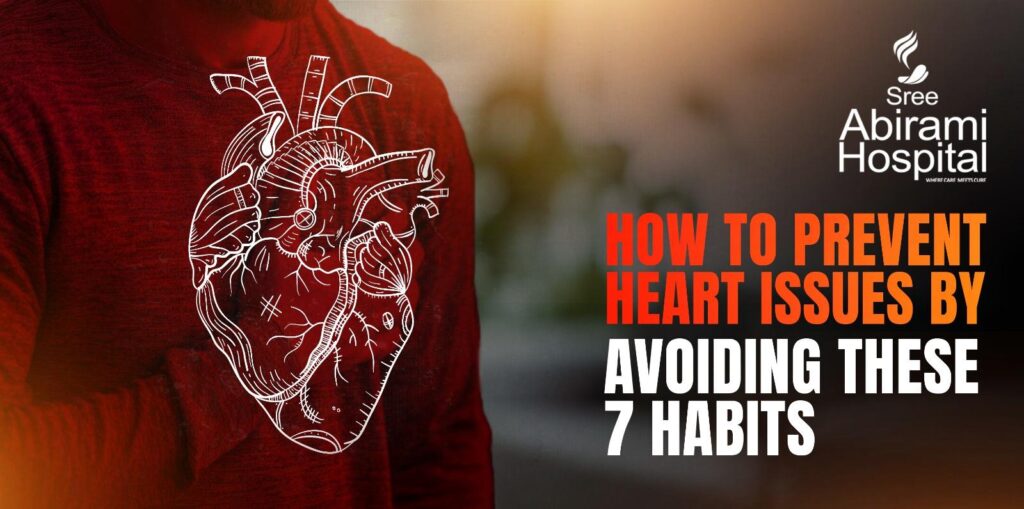
How to Prevent Heart Issues by Avoiding These 7 Habits

Your heart is distributing oxygenated blood all over your body. Without you knowing it, there are several small exercise and lifestyle choices you make daily that could be gradually hurting your heart. Heart disease remains the leading cause of death in the world today. The bright side is that it can be prevented. If you avoid these harmful behaviors and use these basic lifestyle modifications, you will greatly decrease your risk of developing heart disease, hypertension, heart attack or stroke. Abirami hospital of cardiology offers a wide spectrum of services including advanced diagnostic services and preventive cardiac care screening, management of all cardiac disorders and cardiac emergencies. Learn more: https://abiramihospital.com/cardiology/ Why Heart Health Matters If your heart is healthy, it can supply the body with oxygen and nutrients asas it should. When your heart becomes weak or blocked, it won’t be able to supply the body with these, and more emergency medical situations may happen. Some common heart conditions include: Heart attack Heart failure Heart valve diseases 7 Habits You Should Avoid to Protect Your Heart Unhealthy Habit How It Affects Your Heart Better Alternative Smoking Harms blood vessels and can lead to a heart attack Break your smoking habit now! Excessive stress Contributes to high blood pressure and other heart problems Manage stress through relaxation and regular exercise Poor sleep Contributes to a higher risk of heart disease Get enough sleep by sleeping 7–8 hours per night Excessive alcohol consumption Increases blood pressure Limit alcohol consumption or avoid it altogether Ignoring health check-ups Delays diagnosis Have your heart checked regularly Diabetes or BP is not under control Damages arteries Follow up and maintain continuous observation 1.Smoking The largest risk factor for heart disease can be attributed to tobacco usage. It: Constricts blood vessels Diminishes oxygen transportation Raises blood pressure Stimulates blood clotting Increases the risk of having a heart attack The harmful effects of smoking, including passive smoking, on heart health have already been proven. Tip: No other action can be as positive as quitting smoking; it really does improve your heart health. 2.Eating an Unhealthy Diet Your daily dietary choices affect your heart. Avoid eating too much: Fried foods Processed snacks Salty foods Processed foods Trans fats Instead, include: Fresh fruits Green vegetables Whole grains Nuts Lean protein A healthy diet for your heart can maintain your cholesterol and blood pressure within the normal range. 3.Obesity Obesity can increase the risk of: Diabetes High blood pressure Heart disease This process should be done one to three times a week to help the heart muscle develop and improve blood circulation throughout the body. Aim for: 30 minutes of brisk walking Cycling Swimming Light jogging Yoga 4.Living with Constant Stress Stress may cause: Hypertension Poor sleep Manage stress through: Meditation Family and social time Listening to music Regular exercise Even when under stress, your heart and mind are working harder. 5.Not Getting Enough Sleep Rest is a fundamental regulator of inflammation and has a unifying effect on blood pressure and cardiac rhythm. Adults should sleep: 7–8 hours each night To improve sleep: Go to sleep at a reasonable hour. Don’t use your cell phone before going to sleep. Poor sleep may contribute to: Hypertension Irregular heartbeat Myocardial dysfunction Weight gain 6.Excessive Alcohol Consumption Excessive alcohol consumption can negatively affect heart health and increase blood pressure. If you drink alcohol: Set a quantity limit. Avoid excessive consumption. 7.Ignoring Regular Health Check-ups Most cardiac pathology can be asymptomatic. Conditions like: Hypertension Diabetes May be silent until damage has occurred and may have no symptoms until significant damage has occurred. Health screening allows a problem to be detected early. Your doctor may recommend checking: Blood pressure Blood sugar Cholesterol ECG Echocardiogram Cardiac stress test (if indicated) Early diagnosis appears to have a better prognosis. People with: Hypertension Family history of heart disease Should be alert and have early check-ups as soon as possible. With early detection, there is a good chance of avoiding further problems. Advanced Heart Care at Abirami Hospital Services include: Heart health screening ECG Echocardiography Stress testing Hypertension management Cholesterol management Heart attack emergency response Cardiac consultation Lifestyle counselling for the prevention of CHD Whether for routine investigations or the complex management of any cardiac problem, you are most comfortable in the hands of the cardiac team at Abirami Hospital. Learn More: https://abiramihospital.com/cardiology/ FAQs Can I prevent Heart Disease? The majority of types of heart disease are preventable if people don’t smoke, eat sensibly, keep reasonably fit, maintain a healthy weight, and go for regular health check-ups. When should I go for a heart health screening? Watch your heart as often as needed, especially once past age 40 if you have diabetes, high blood pressure, obesity, or a family history of heart disease. Why choose Abirami Hospital? Abirami Hospital has all the facilities to provide comprehensive cardiology services like screening and prevention programs, modern diagnostic facilities, emergency cardiac care, and treatment plans. ​ E-E-A-T Blog Created by: V. Ayyappa Content Reviewed by: RYH Content Team Fact-Checked by: RYH Content Team Medical Review by: Cardiology Expert / Cardiologist Image Designed by: Adobe Photoshop Research & References: Reputable Medical and Healthcare Sources Editorial Review: RYH Editorial Team Content Quality Checked by: RYH Content Team SEO & Content Optimization: RYH Content Team Published by: Abirami Hospital Department: Cardiology Department Content Purpose: Patient Education & Heart Health Awareness Sources Verified: Medical Guidelines & Trusted Healthcare Resources Editorial Standard: Accuracy, Clarity & Patient-Focused Information Disclaimer: This content is for educational purposes and does not replace professional medical advice.

Scroll to Top