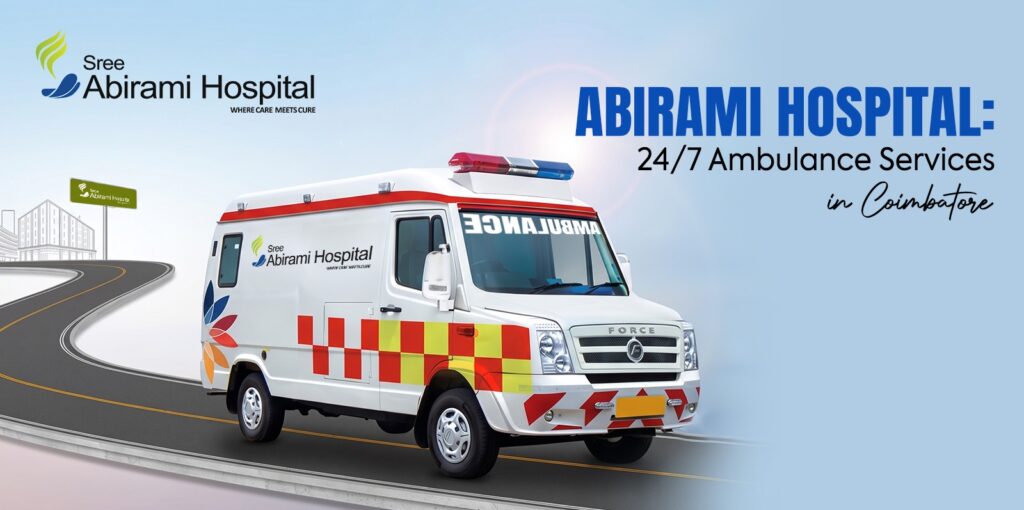
Abirami Hospital: 24/7 Ambulance Services in Coimbatore
It’s always crucial to receive timely medical care in the event of an emergency, whether this involves a sudden health issue, serious injury, accident or other critical circumstances. The importance of quick access to a hospital is the only part of emergency care. Proper transportation, medical care, communication and coordination can also be important in the journey to safety. That’s where Abirami Ambulance Service is the perfect choice. The First Few Minutes Can Matter An ambulance fitted with medical equipment can give medical help when a patient is being transported, rather than organising private transport for an urgent case. For patients who need medical transportation and emergency assistance, Abirami Hospital offers 24×7 ambulance service in Coimbatore. Abirami Hospital’s Ambulance Support Abirami Hospital’s Ambulance services consist of: 24/7 emergency availability Medical transportation Trained paramedics Life-support ambulance facilities Transport ventilators Emergency medical support City-wide ambulance availability Why Fast Ambulance Response Matters An organized ambulance response may include: Emergency Call – Information about the patient’s condition and location is shared. Dispatch – The ambulance team is notified and called for. Medical Support – Appropriate support from paramedics on transport. Hospital Communication – Patient data can be shared with the healthcare team as required. Hospital Arrival – Patient is moved for additional assessment and treatment in the emergency setting. According to Abirami Hospital, the dispatch process involves the officer coming in and arranging the response. What Should You Look for in an Ambulance Service? When considering emergency vehicles for travel, don’t focus exclusively on the vehicle. What to Check Why It Matters 24/7 Availability Emergency situations can happen at any time Trained Paramedics Provides medical support during transport Emergency Equipment Supports critical care during transportation Communication Helps coordinate ambulance and hospital teams Dispatch System Supports faster emergency response Hospital Coordination Helps prepare the receiving medical team How Abirami Hospital’s Ambulance Service Works Abirami Hospital follows a simple emergency-response process. Step 1: Make the Emergency Call Contact the hospital’s emergency service. Step 2: Share the Required Information The dispatch officer gathers details about the patient and location. Step 3: Ambulance Dispatch The ambulance is sent according to the emergency requirements. Step 4: Medical Support During Transport Trained paramedics provide appropriate emergency support and use available medical equipment when required. Step 5: Hospital Coordination The ambulance team communicates relevant patient information with the hospital’s emergency team. Step 6: Further Medical Care The patient is transferred to the hospital for further assessment and treatment. Check out, Why Trust Abirami Ambulance Service During Emergencies? Abirami Hospital Ambulance Services: Quick Snapshot Feature Abirami Hospital Availability 24/7 Emergency Number +91-422-2466666 Ambulance Number 1073 Paramedic Support Yes Life-Support Ambulance Available Defibrillator Available Transport Ventilator Available Hospital Communication Available Coverage Across the city These details have been taken from Abirami Hospital’s official page of Ambulances. The Future of Ambulance Services The network of ambulances is becoming more integrated into the broader system of emergency healthcare. The National Ambulance Services guidelines 2026 support the application of technologies like GIS mapping and the use of data to inform ambulance deployment to enhance emergency response and locate suitable healthcare facilities. From basic transportation of patients → to multi-layered pre-hospital emergency care. FAQs Does Abirami hospital have 24/7 ambulance service? Yes. According to Abirami Hospital, the hospital has an ambulance service which is working round the clock for emergency transportation. Who can I call for Abirami Hospital’s ambulance? The official website provides the Emergency Services number as +91-422-2466666 and the Ambulance Services number as 1073. Is there medical equipment in the ambulatory car of Abirami? Yes. According to the hospital, its life-support ambulances are equipped with a number of devices including defibrillators and transport ventilators. Do you have trained paramedics with you on transport? Yes. The Abirami Hospital claims trained paramedics provide emergency assistance and critical care during transportation of patients. Why is it significant to communicate during an ambulance ride? Communication enables ambulance staff and hospital doctors to be knowledgeable about the patient and prepares the hospital staff for the patient’s arrival in hospital. Conclusion The Ambulance Services of Abirami Hospital in Coimbatore is provided with all the required facilities like having an ambulance at any time of day along with qualified paramedics and medical equipment, communication between the dispatch and hospitals, which gives support to the patient whenever the need for medical aid arises. In case of emergency: Be composed, give correct information, and do not delay in taking medical aid. E-E-A-T Content Created by: Ghowthami M Reviewed by: Content Team Fact-Checked with: Official Abirami Hospital Website Published by: Abirami Hospital Content Standard: Accurate, Clear & Parent-Focused Source Links: https://timesofindia.indiatimes.com/ https://www.indiatoday.in/ https://www.newindianexpress.com/ https://abiramihospital.com/ https://abiramihospital.com/ambulance-services-in-coimbatore/ Click here